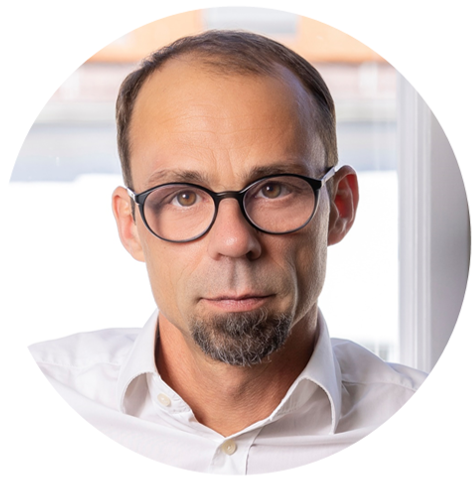
Stefan leads the institute since 10/2024. Before he works as associate professor @ EBW. His research focuses on wide-spread topics of asset management with a strong economic focus. In his habilitation, he established track access charges as integral part of track asset management. His teachings portfolio covers all areas of railway engineering and transport economics.
Why civil engineering?
I grew up in the world of construction with a civil engineer father and a construction foreman as grandfahter. We always had drawing, I always had plans, sketches, concrete mixers and piles of sand around me and visitied construction sites, mainly road sites. While other children made normal drawings, I used tracing paper, clothoid curves and standard lettering templates to create drawings with exact proportions. We also built ‘children’s things’ such as tree houses or football goals, always using real building materials and adult tools. So it was a foregone conclusion that I would end up somewhere in or around construction.
And why railway engineering then?
After attending a gymnasium with language focus (how could I?) and completing a two-year civil engineering HTL course (just to get things right), I went to university to study road planning and construction and follow in my father’s footsteps. Everything turned out differently: my father died early, the office was closed down, and I developed a liking for railways because they are very similar to roads, but in all aspects a tad more interesting, intricate and complex. So, after graduating, I took a PhD position at the EBW and became a railwayman.
What do you like about university life?
University life is always vibrant. As a lecturer and research manager, you are constantly teaching and working with new generations of engineers. Skills and approaches change, but enthusiasm, motivation and inspiration remain constant. Being constantly surrounded by intrinsically motivated young people keeps you young at heart and broadens your horizons.
And how do you define your job?
In my teaching, I want to give students an understanding of the interactions and interfaces in the railway industry. Of course, proper tools are needed, but the university is not a training centre; its purpose is to create and impart knowledge. If any of my students come into contact with the railway industry in their careers, I want them to remember that every small change, even minor details, can have an impact on the entire system.
As a researcher and supervisor of research projects, I always want to approach topics with an open mind, without ignoring their background. I also expect my colleagues at the institute to do solid work with an open outcome. Science must question the status quo and discard ideas, and it is particularly important to remember that there is never a single, universally valid result that cannot be refuted, modified or discarded by further research.
What do you consider your most interesting or challenging research project?
Oh, there have been so many… In the front row, I see however, the projects concerning track access charges we had, the successful ones as well as the un-successful ones. Adding technical perspectives to this financial, commercial, regulated, and juridical topic was and still is extremely challenging. So many different perspectives have to be considered, so many different actors to be convinced of positive outcomes of this doing and also the calculations to be performed are complex. We did investigations in Austria, in Switzerland, together with KTH Stockholm in Sweden, and also in different EC projects. All of them will keep in my memory , together with the light and the dark moments and all the people involved.
How do you manage your work-life balance?
I work too much J Without joking: Work takes up so much space in my life that I have to enjoy doing it, and I do. I find balance with family and friends. I like to party to keep things light-hearted, I love football to practise controlling my emotions, and otherwise I like to be outdoors – preferably building something…